A playful interrogation of player choice and agency in games
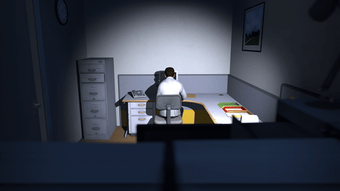
The Stanley Parable, developed by Galactic Cafe, reimagines interactive storytelling as a probing exploration of choice and agency. The game places you in an office-shaped experiment where following or defying an omniscient Narrator forms the main loop, mixing exploration with player-directed testing. Its structure highlights branching paths, meta-fictional commentary, and dark humor. Designed for players who enjoy narrative-driven, experimental indie titles, it rewards curiosity and repeated playthroughs to uncover many endings.
Why was the game remade and who made it?
The title began as a 2011 Half-Life 2 mod by Davey Wreden and was rebuilt as a standalone project by the developer to expand content and narration. The studio founders, Davey Wreden and William Pugh, shaped the remake to add new routes and refreshed presentation, framing the project as an experiment in interactive authorship rather than a conventional sequel.
How does player choice shape the play session?
Player decisions form the experiment's core; disobeying the Narrator triggers scripted, reactive outcomes instead of a single linear path. The structure contains dozens of unique endings and many hidden secrets, so a single run can last from a few minutes to roughly thirty minutes. To see most outcomes players typically spend three to seven hours exploring branches. Key replay drivers include:
- Contradictory Narrator responses
- Hidden routes unlocked by disobedience
- Multiple, distinct endings
What does it sound like and run on?
The game's voice performance gives it much of its personality: narration by Kevan Brighting reacts to player choices in real time and delivers the script's dark humor and philosophical lines. Presentation keeps the interface minimal, prioritizing text and spoken commentary over complex HUDs. On Windows the title requires modest resources, a DirectX 9 compatible video card and about 2 GB of RAM, so it runs on lower-end desktop setups.
Who benefits most from playing it?
The game is an inviting choice for players who prefer compact, thought-provoking experiments and narrative puzzles rather than action-driven sessions. It rewards curiosity and repeated attempts, making it ideal for those who enjoy piecing together authorial commentary and philosophical ideas. Players seeking extended combat or open-world objectives find the design less suitable. For narrative-focused players, the game offers a satisfying, concentrated set of experiences over multiple short sessions.